Fall Armyworm (FAW) is one of the most destructive pests in maize farming today. If not controlled early, it can reduce yields drastically. Understanding how it grows, how it damages maize, and how to control it will help farmers protect their crops and increase harvests.
What is Fall Armyworm?
Fall armyworm (FAW) is a destructive caterpillar that feeds mainly on maize. It spreads quickly and attacks crops at different growth stages.
Stages of Fall Armyworm
FAW has four main life stages:
1. Egg Stage
- The adult moth lays eggs in clusters on maize leaves.
- Eggs are usually covered with fine hairs.
- They hatch within 2–5 days.
2. Larva (Caterpillar) Stage – Most Destructive Stage
- After hatching, the small caterpillars begin feeding on leaves.
- They grow bigger and darker.
- This stage lasts about 14–21 days.
- Large larvae can eat a lot of leaf material and destroy the growing point of maize.
3. Pupa Stage
- The caterpillar goes into the soil.
- It forms a cocoon (pupa).
- This stage lasts about 7–14 days.
4. Adult Moth Stage
- A moth emerges from the soil.
- The moth flies and lays eggs on maize again.
- The cycle continues.
Because the life cycle is short, infestation spreads quickly.
How Fall Armyworm Damages Maize
FAW can attack maize at any stage.
Early Stage Damage
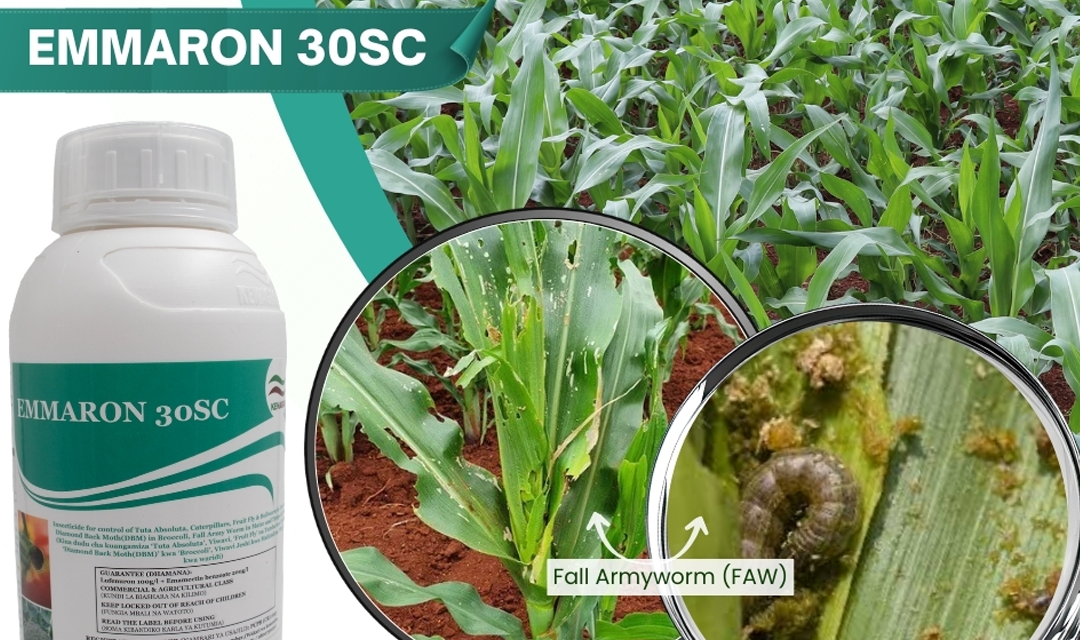
- Small “window-like” holes on leaves.
- Leaves look scraped or transparent.
Later Stage Damage
- Big irregular holes on leaves.
- Sawdust-like waste (frass) inside the maize whorl.
- Damaged growing point (dead heart).
- Poor cob formation.
If not controlled early, yield loss can be very high.
Agronomic Practices to Reduce FAW Infestation
Farmers can reduce FAW risk by practicing good crop management:
✔ Early Planting
Plant early at the beginning of rains to avoid peak FAW season.
✔ Field Sanitation
- Remove crop residues after harvest.
- Destroy volunteer maize plants.
- Control weeds around the field.
✔ Crop Rotation
Avoid planting maize in the same field season after season.
✔ Regular Field Scouting
- Inspect your crop at least twice a week.
- Check inside the maize whorl for eggs and larvae.
- Early detection makes control easier and cheaper.
✔ Proper Fertilization
Healthy maize plants tolerate pest damage better.
Best Active Ingredients to Control Fall Armyworm
Two highly effective active ingredients against FAW are:
1. Emamectin Benzoate
- Works by attacking the pest’s nervous system.
- Stops feeding quickly.
- Kills larvae effectively.
2. Lufenuron
- Disrupts the insect’s growth process.
- Prevents larvae from developing properly.
- Controls future generations.
Why Combine Them?
When Emamectin Benzoate and Lufenuron are used together:
- They provide fast knockdown and long-lasting control.
- They control both young and older larvae.
- They help reduce resistance development.
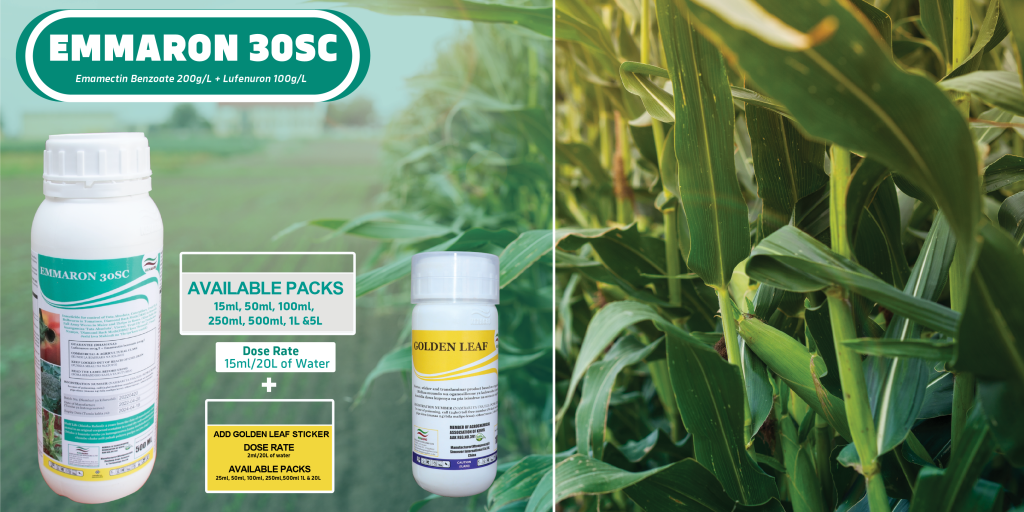
Recommended Solution: Emmaron 30SC
Farmers are encouraged to use Emmaron 30SC from Kenagro Suppliers Limited.
Product Composition:
- Emamectin Benzoate 200g/L
- Lufenuron 100g/L
Benefits of Emmaron 30SC:
Fast action against Fall Armyworm
Long-lasting protection
Controls different larval stages
Improves maize yield potential
Has a small dose rate, making it cost effective.
For best results:
- Spray when larvae are still small (early infestation).
- Ensure proper coverage inside the maize whorl.
- Follow label instructions for dosage and safety.
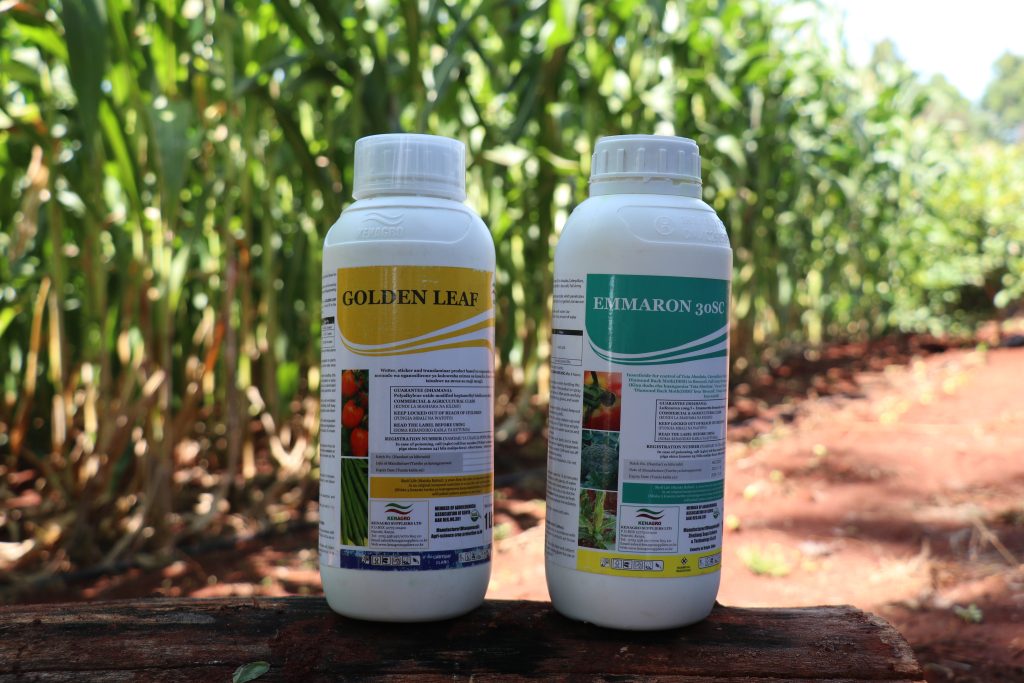
- It is also important to add a sticker when spraying, to ensure optimal efficiency. Mix Golden Leaf, at the rate of 2ml/20L of water, together with Emmaron 30SC.
Do not wait until damage is severe. Scout your field regularly. Combine good farming practices with effective insecticides. Use trusted products like Emmaron 30SC for reliable control. Early action saves your crop and increases your harvest.