Tomatoes can be very profitable when the crop is healthy. But many farmers have experienced the pain of watching a beautiful green field slowly turn brown and dry. In most cases, the problem is blight.
Blight is one of the most destructive diseases of tomatoes. If not controlled early, it can wipe out an entire crop.
Let us understand what blight is, how it develops, the damage it can cause, and the best way to manage it using both good farming practices and the right fungicide.
What is Blight?
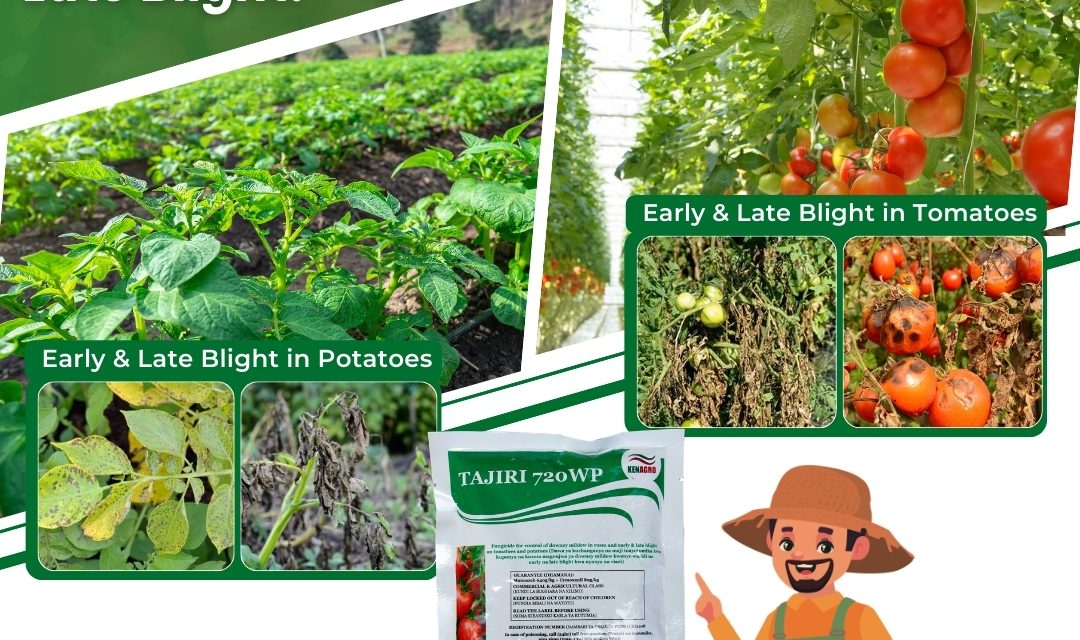
Blight is a fungal disease that attacks tomatoes. There are two major types:
- Early Blight (caused by Alternaria solani)
- Late Blight (caused by Phytophthora infestans)
Both attack leaves, stems, and fruits, but Late Blight spreads faster and can destroy a field within days during wet weather.
Blight spreads easily in:
- Rainy conditions
- High humidity
- Cool to warm temperatures
- Poorly ventilated fields
Stages of Blight in Tomatoes
Blight does not start by destroying the whole plant at once. It develops in stages.
Stage 1: Early Leaf Spots
- Small brown or dark spots appear on lower leaves.
- Early Blight spots often look like rings (like a target).
- Late Blight spots look wet or water-soaked.
This is the best time to act.
Stage 2: Rapid Spread
- Leaves turn yellow and dry.
- Infection spreads upward.
- Dark patches may appear on stems.
The plant becomes weak because it cannot make enough food.
Stage 3: Fruit Infection
- Fruits develop dark, sunken spots.
- Fruits rot before harvest.
- Market quality drops sharply.
At this stage, losses can be severe.
How Much Damage Can Blight Cause?
If left unattended:
- Yield losses can reach 50%–100%.
- Entire fields may dry before harvesting.
- Farmers lose money invested in seed, fertilizer, chemicals, and labor.
Late Blight especially can destroy a tomato crop in less than two weeks during rainy weather.
Prevention is always cheaper than cure.
Agronomic Practices to Prevent and Manage Blight
Good farming practices reduce disease pressure and make fungicides work better. Every farmer should follow these steps:
1. Use Healthy, Certified Seedlings
- Avoid planting infected seedlings.
- Inspect nursery plants carefully before transplanting.
- Remove any seedlings showing spots or disease symptoms.
Healthy planting material is the first line of defense.
2. Practice Crop Rotation
Do not plant tomatoes in the same field every season.
Rotate with crops like:
- Maize
- Beans
- Cereals
Avoid rotating with other solanaceous crops like potatoes or peppers because they can host similar diseases.
Crop rotation breaks the disease cycle in the soil.
3. Proper Spacing
Do not overcrowd plants.
Good spacing:
- Improves air circulation.
- Reduces humidity around leaves.
- Allows spray to reach all parts of the plant.
Crowded fields stay wet longer, which encourages blight.
4. Improve Field Drainage
Blight thrives in wet conditions.
- Avoid waterlogging.
- Make raised beds where possible.
- Ensure proper drainage channels.
Standing water increases disease spread.
5. Avoid Overhead Irrigation
Water on leaves encourages fungal growth.
Instead:
- Use drip irrigation if possible.
- Irrigate early in the day so leaves dry quickly.
Dry leaves mean fewer infections.
6. Remove Infected Leaves Early
At the first sign of infection:
- Remove affected leaves.
- Bury or burn them away from the field.
Do not leave infected plant material in the field, as it spreads disease.
7. Clean Field After Harvest
- Remove crop residues.
- Plough under deeply or destroy infected plant remains.
This reduces disease carryover to the next season.
Best Active Ingredients to Control Blight
Even with good agronomic practices, fungicides are necessary—especially during rainy seasons.
Two of the most effective active ingredients are:
Mancozeb – Protective Action
Mancozeb works by:
- Forming a protective barrier on the leaf surface.
- Preventing fungal spores from germinating.
- Stopping new infections before they start.
It acts like a shield.
Cymoxanil – Curative Action
Cymoxanil works by:
- Penetrating inside the plant tissue.
- Stopping fungal development shortly after infection.
- Slowing disease spread inside the plant.
It fights infection from within.
Why Combination Products Work Better
When Mancozeb and Cymoxanil are combined:
- The plant is protected on the outside.
- The disease is controlled on the inside.
- Both Early and Late Blight are effectively managed.
- Resistance development is reduced.
This gives farmers stronger and more reliable control.
Recommended Solution: Tajiri 720WP
For effective management of tomato blight, we recommend Tajiri 720WP.
It contains:
- Mancozeb 640g/Kg
- Cymoxanil 80g/Kg
Benefits of Tajiri 720WP:
✔ Protects against Early and Late Blight
✔ Stops new infections
✔ Controls early existing infections
✔ Improves leaf health
✔ Supports higher marketable yields
When to Spray
- Start spraying at the first sign of disease.
- Spray preventively during wet and humid weather.
- Follow recommended dosage and intervals.
- Ensure full coverage of leaves (top and bottom).
Do not wait until the disease has spread widely.
Final Advice to Farmers
Blight is a serious disease—but it can be controlled.
Success comes from combining:
- Good agronomic practices
- Early detection
- Timely fungicide application
- A reliable product like Tajiri 720WP
Healthy leaves produce healthy fruits.
Healthy fruits bring better market prices.
And better prices mean better profits for your farm.
Act early. Protect your crop. Secure your harvest.