Learning how to manage Persea mites in avocado orchards is critical for maintaining tree health and ensuring a high-quality yield, especially during dry seasons.
Persea mites are among the most destructive pests in avocado production, particularly in areas that experience prolonged dry and warm conditions. If not managed properly, they can quickly build up and cause significant losses. A clear understanding of their biology, damage, and control options is essential for effective management.
What are Persea Mites?
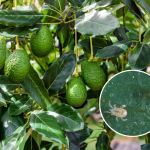
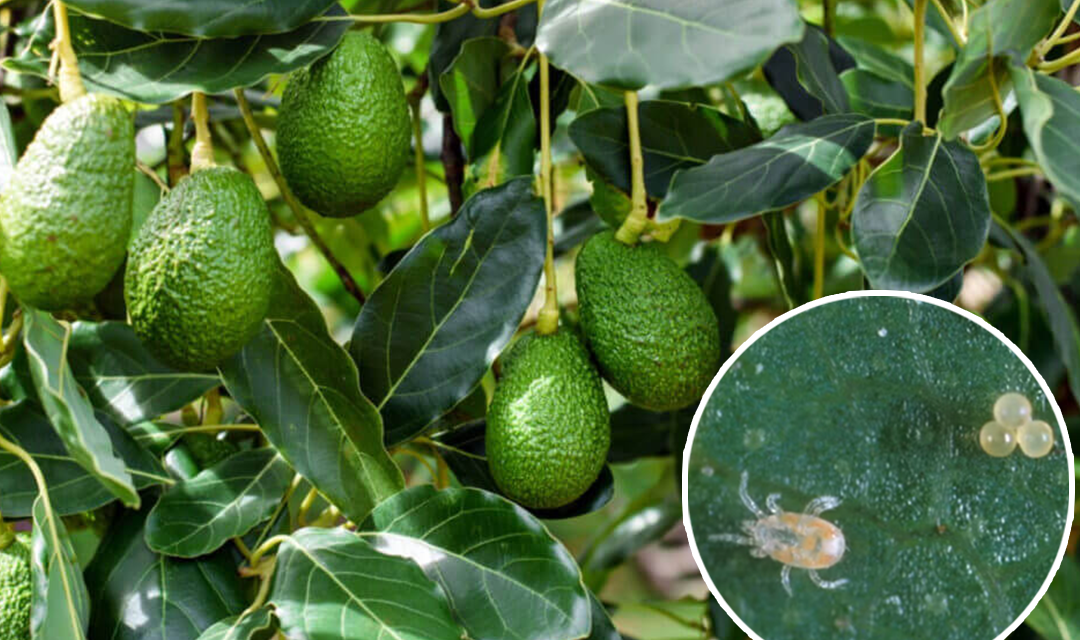
Persea mites (Oligonychus perseae) are very small, sap-sucking pests that belong to the spider mite group. They are mostly found on the underside of avocado leaves, where they form dense colonies protected by fine silken webbing. These mites prefer mature leaves and often cluster along the veins.
Because they are microscopic, infestations are usually detected through the damage they cause rather than by directly seeing the mites.
Understanding Persea Mite Development Stages
Persea mites have a rapid life cycle, which allows them to multiply quickly under favourable conditions. Their stages include:
- Egg stage: Eggs are laid on the underside of leaves within the webbing.
- Larval stage: Newly hatched larvae begin feeding immediately.
- Nymph stages (protonymph and deutonymph): These are active feeding stages where most plant damage occurs.
- Adult stage: Adults continue feeding and reproducing, increasing infestation levels.
The full life cycle can be completed within 10–14 days in warm weather, leading to overlapping generations and rapid population explosions.
Damage and Effects of Avocado Persea Mites Management
Persea mites damage avocado trees by piercing leaf tissues and sucking out cell contents. This results in:
- Yellow to brown necrotic spots on leaves
- Bronzing and discoloration of the leaf surface
- Reduced photosynthesis due to damaged leaf tissue
- Premature leaf drop (defoliation)
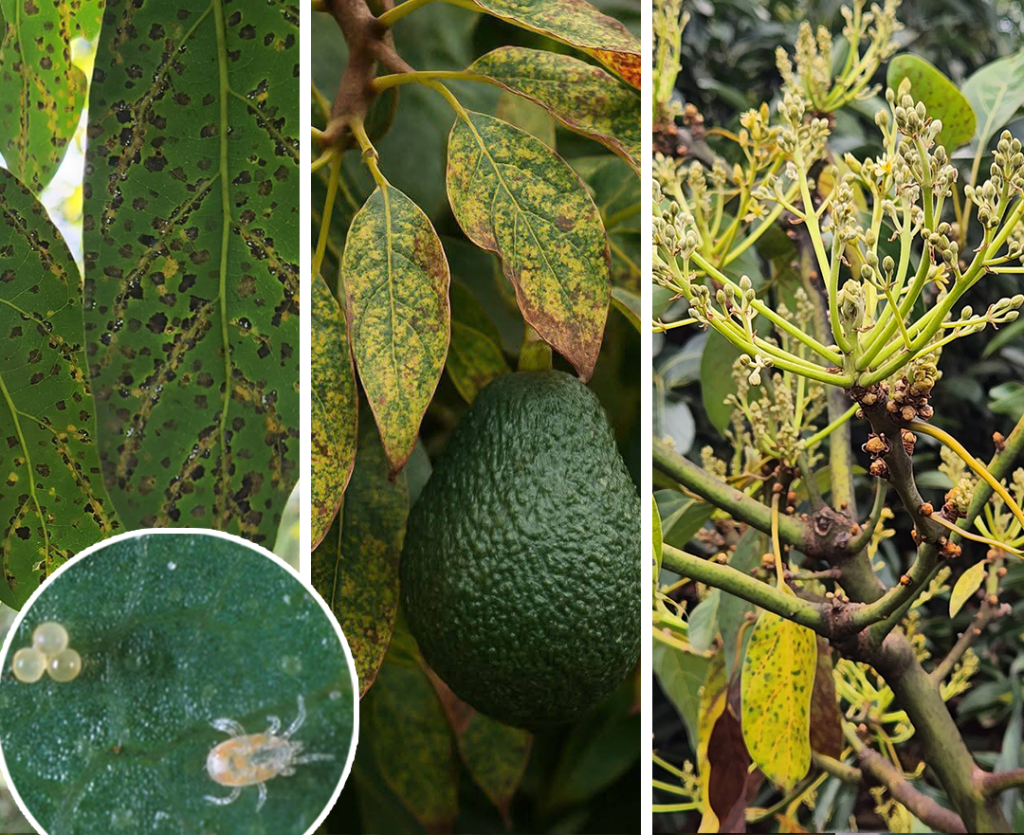
Severe infestations can cause extensive leaf damage, exposing fruits to direct sunlight. This can lead to sunburn damage, reduced fruit quality, and ultimately lower yields. Repeated attacks may also weaken the tree over time.
Agronomic Practices for Persea Mites Prevention and Management
An integrated approach combining cultural practices is essential to reduce mite pressure:
- Regular scouting: Frequently inspect the underside of leaves to detect early infestations.
- Adequate irrigation: Maintain consistent soil moisture, as drought-stressed trees are more susceptible.
- Pruning and canopy management: Open up the tree canopy to improve airflow and reduce favorable conditions for mites.
- Dust control: Minimize dust from roads or farm activities, since dusty conditions encourage mite outbreaks.
- Weed management: Keep the orchard clean to reduce alternative hosts.
- Conservation of natural enemies: Predatory mites and insects help suppress persea mite populations naturally.
Effective Chemical Solutions for Avocado Persea Mites Management
When mite populations exceed economic thresholds, chemical intervention becomes necessary. It is important to use selective miticides that target mites effectively while minimizing harm to beneficial organisms.
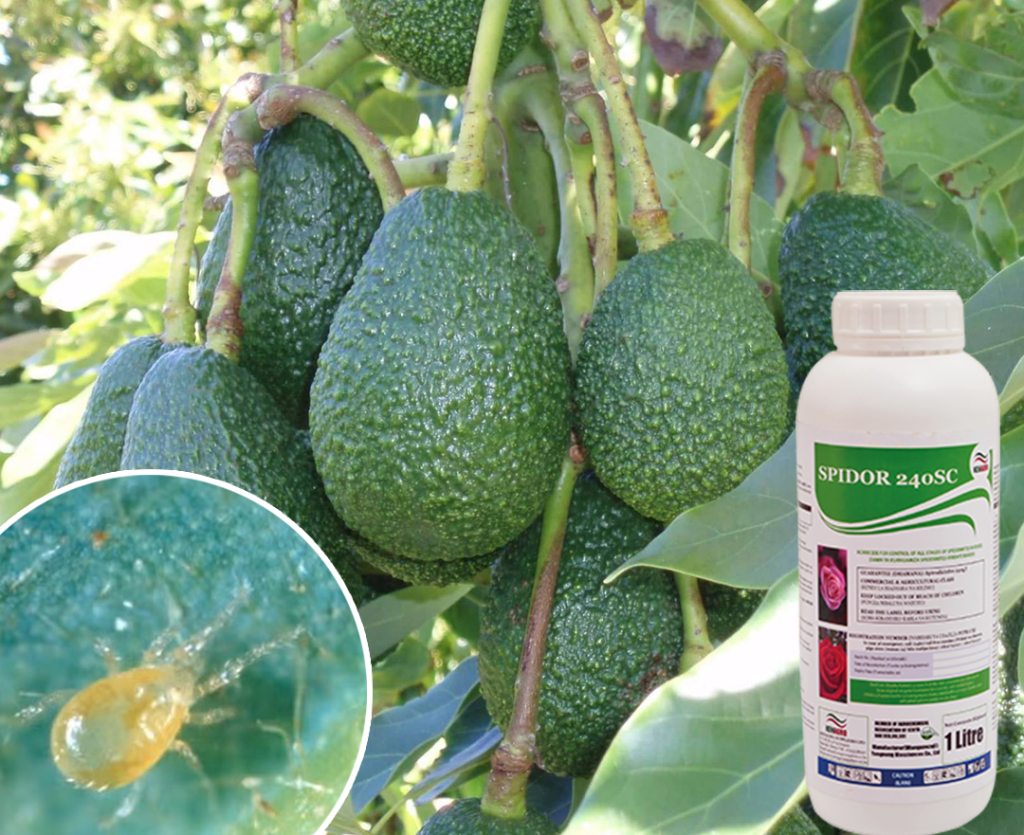
One of the most reliable active ingredients for controlling persea mites is Spirodiclofen, which works by inhibiting lipid synthesis in mites, disrupting their growth and development. It is effective against eggs, nymphs, and adults, helping to break the life cycle.
A recommended product is Spidor 240SC, containing Spirodiclofen 240g/L, supplied by Kenagro Suppliers Limited. It provides long-lasting control and is suitable for integration into a broader pest management program.
For best results:
- Apply at the early stages of infestation at the rate of 10ml/20L of water.
- Ensure thorough coverage, especially on the underside of leaves
- Always follow recommended label rates and safety guidelines
Integrating Spidor 240SC into your Avocado Persea Mites Management program ensures long-lasting protection.
Persea mites can cause serious damage to avocado orchards if left unmanaged. However, with proper monitoring, good agronomic practices, and timely use of effective miticides such as Spidor 240SC, farmers can successfully control infestations. An integrated pest management approach remains the most sustainable way to protect avocado trees, maintain productivity, and ensure high-quality yields.