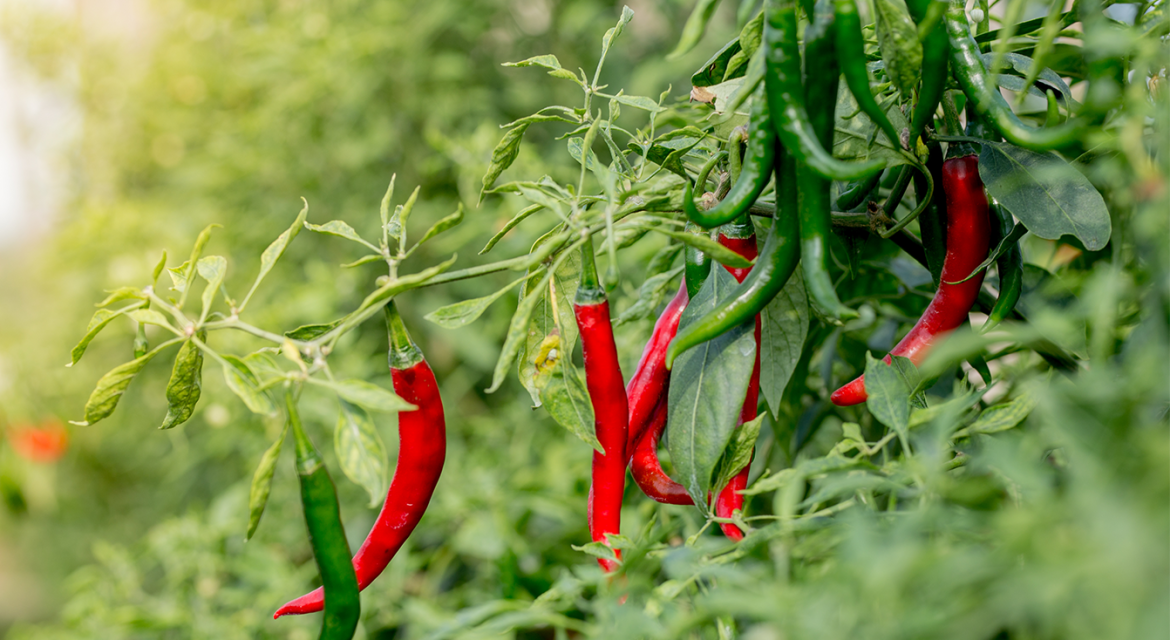
Chilli farming (hot pepper) is one of the most lucrative commercial agribusinesses in Kenya. Due to high international demand across Europe, the Middle East, and Asia—alongside strong domestic consumption for spicy sauces and spices—chillies offer farmers high returns with relatively low maintenance compared to other horticultural crops.
1. Top Commercial Chilli Varieties Grown in Kenya
Choosing the right chilli variety depends heavily on whether your target market is local processing or direct export.
- African Bird’s Eye (ABE): Small, extremely hot chilli ($100,000 – 225,000$ Scoville units). Highly demanded by international buyers for extract, oleoresin, and spice processing.
- Demon F1 / Bullet Chilli: Medium-sized, high-yielding, and moderately hot. Very popular in domestic Kenyan markets and fresh food joints.
- Scotch Bonnet / Habanero: Distinctive aroma, lantern-shaped, extremely pungent. Highly marketable locally and internationally for hot sauce production.
- Cayenne Long Red: Long, thin peppers widely used for fresh markets and drying into chilli powder.
2. Optimal Growing Conditions
Chillies are hardy crops that perform exceptionally well in warmer regions of Kenya.
- Ideal Altitude: Low to medium altitudes ($0 – 1,500$ meters above sea level).
- Temperature: Thrives best between 20°C and 32°C. Warm weather significantly enhances fruit pungency (capsaicin levels).
- Soil Requirements: Well-drained loamy or sandy-loam soils with high organic matter.
- Soil pH: Prefers a pH level between 6.0 and 7.0.
3. Propagation, Nursery Management & Spacing
Nursery Management:
- Raise chilli seeds in nursery beds or seedling trays.
- Protect young seedlings with shade netting or a light mulch overlay.
- Seedlings are ready for field transplanting at 5 to 7 weeks (approx. 10–12 cm tall).
Field Spacing:
- Spacing: Space rows 50 cm to 60 cm apart and plants 30 cm to 40 cm apart within the row.
- Plant Population: Allows for approximately 18,000 to 22,000 plants per acre, depending on the variety size.
4. Field Management: Water, Nutrition & Pruning
Irrigation Practices:
Chillies are relatively drought-tolerant compared to capsicums, but consistent watering boosts yields significantly. Avoid waterlogging at all costs, as chillies are extremely sensitive to root rot.
Fertilizer Strategy:
- Planting: Apply organic compost + DAP in planting holes.
- 3 Weeks Post-Transplant: Top-dress with CAN to build a strong canopy.
- Flowering/Fruiting Stage: Apply NPK high-potassium fertilizers to encourage continuous flowering and maximum capsaicin development.
Pruning:
Pinch off the main growing tip when plants reach about 20 cm in height to stimulate lateral branching, leading to more flower sites and double the fruit yield.
5. Major Chilli Pests, Diseases, and Management
| Pest / Disease | Symptoms | Prevention & Treatment |
| African Melon Fly / Fruit Fly | Maggots inside fruits, premature fruit drop | Use pheromone traps; spray target biological pesticides early. |
| Thrips & Mites | Downward curling of leaves, stunted flower production | Spray alternating miticides/insecticides; use sticky traps. |
| Anthracnose (Fruit Rot) | Dark, sunken water-soaked spots on fruits | Use certified disease-free seeds; apply preventative copper fungicides. |
| Damping Off (Nursery) | Seedlings collapse at ground level | Avoid overwatering in nursery beds; treat seeds with fungicide. |
6. Harvesting, Yields, and Export Opportunities
Harvesting:
Chillies usually begin producing fruits 2.5 to 3.5 months after transplanting and can be harvested continuously for 6 to 12 months depending on care and water availability.
- Yield Expectation: Fresh yields range from 4,000 kg to 8,000 kg (4–8 tonnes) per acre per season. For dried Bird’s Eye chilli, expectations sit around 1.5 to 2.5 tonnes per acre.
Marketing & Value Addition Opportunities:
- Export Companies: Contract farming with horticultural exporters supplying EU and Middle Eastern buyers.
- Local Spice Processors: Supplying sauce manufacturing companies (e.g., Peppadew, local hot sauce processors).
- Value Addition: Sun-drying fresh chillies and milling them into ground chilli powder extends shelf life up to 2 years and doubles profit margins.