Starting an avocado orchard—whether for commercial export or high-yield production—is a long-term investment that yields high returns when managed properly. Success depends on five core stages: site selection, planting, orchard routine, comprehensive pest and disease management, and proper harvesting.
1: Site Selection & Soil Preparation
Avocado trees have shallow, highly delicate root systems that occupy the top 20–30 cm of soil. They are extremely sensitive to standing water, making drainage critical.
- Soil Requirements: Aim for well-drained loamy or sandy-loam soils with an ideal pH of 6.0 to 6.5.
- Digging Planting Pits: Dig holes measuring 60 cm × 60 cm × 60 cm roughly 4 weeks before planting to allow the soil to settle.
- Soil Enrichment: Separate the topsoil from the subsoil. Mix topsoil with 20 kg of fully decomposed organic manure alongside a phosphorus-rich starter fertilizer (such as DAP) to jumpstart root establishment.
2: Planting & Variety Selection
Always use certified, disease-free grafted seedlings from accredited nurseries. Avoid growing trees directly from seeds, as they take up to 8–10 years to fruit and do not breed true to type.
- Key Market Varieties:
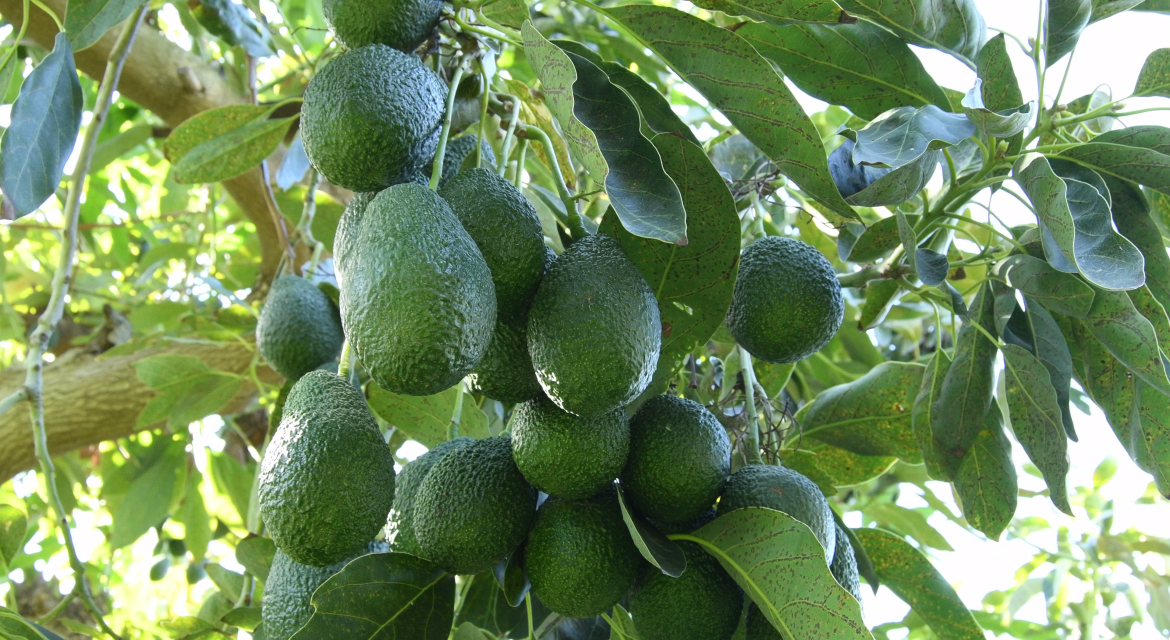
- Hass: The world’s top commercial export variety, turning dark purple-black when ripe.
- Fuerte: A green-skinned favorite with a smooth, buttery texture, often used as a cross-pollinator.
- Reed: A round, late-season green variety known for heavy yields.
- Spacing: Space trees 5 m × 5 m up to 7 m × 7 m apart depending on terrain, equipment access, and canopy control strategy.
- Transplanting: Carefully remove the nursery poly-bag without breaking the root ball. Place the seedling at the exact depth it sat in the container, firm the soil around the base, and water thoroughly.
3: Orchard Management (Growth Phase)
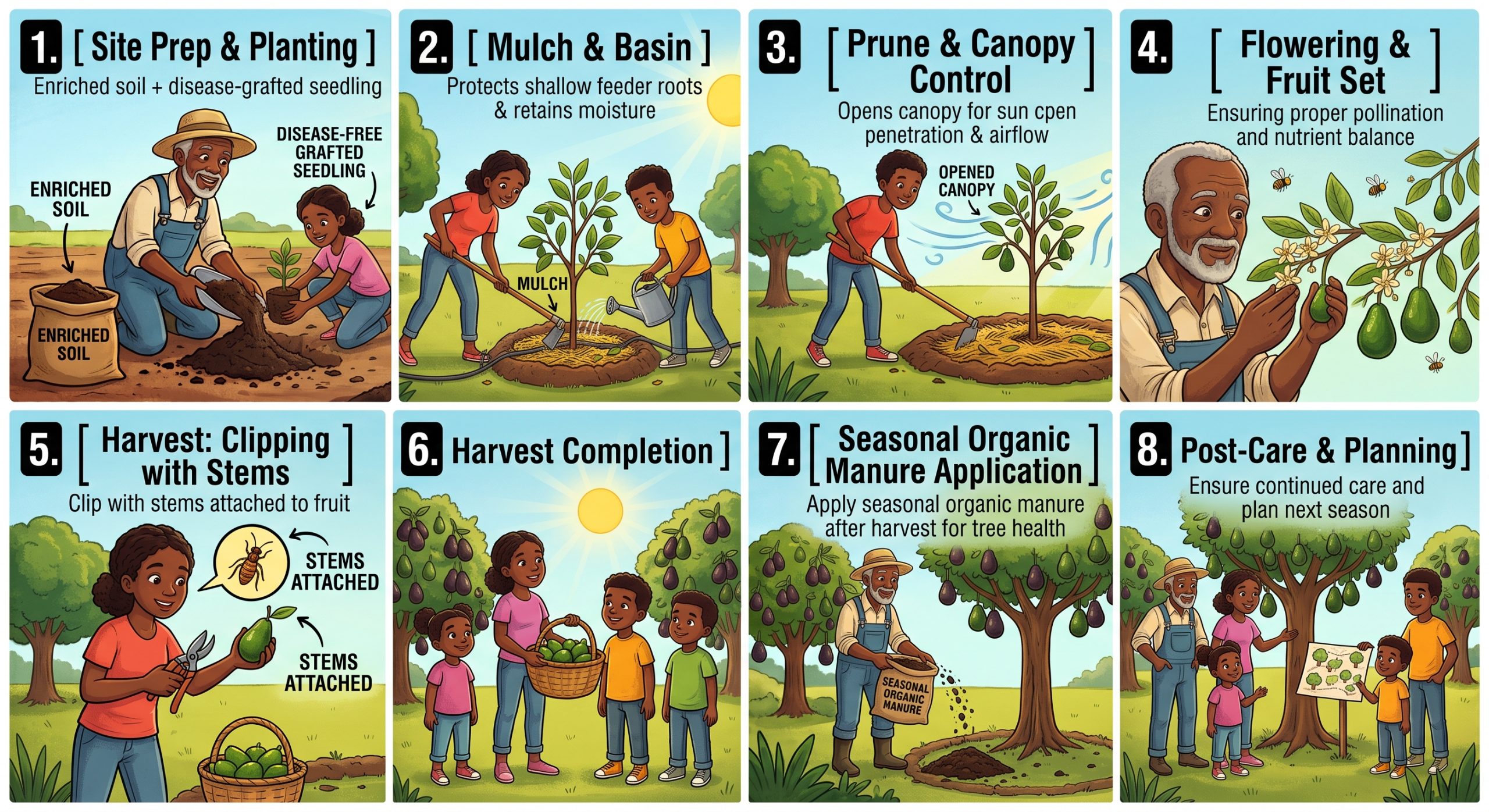
- Irrigation: Young trees need light, frequent irrigation (5–20 liters per watering). Avoid over-saturating the base.
- Mulching: Keep a 10–15 cm layer of organic mulch (straw, wood chips, or dried leaves) around the tree’s drip line. Keep mulch at least 10 cm away from the trunk to avoid stem rot.
- Fertilization Schedule: Apply balanced nitrogen-phosphorus nutrients early on, shifting toward potassium and calcium during flowering and fruit-filling stages. Apply foliar zinc and boron annually to prevent flower drop.
- Pruning: Clip vertical shoots early to encourage lateral growth. Periodically cut out dead, crisscrossing, or diseased inner branches to maintain sunlight penetration and reduce humidity.
Major Avocado Diseases
1. Root Rot (Phytophthora cinnamomi)
Root rot is the most destructive disease affecting avocado orchards worldwide, attacking the delicate feeder roots.
- Damage & Symptoms: Leaves turn pale yellow, wilt, and drop prematurely, causing sparse canopies and top-down branch dieback. Affected feeder roots appear brittle, black, and rotted instead of healthy and white.
- Control & Treatment: Ensure proper site selection with excellent drainage or plant on raised mounds. Avoid standing water around the root zone, use rot-tolerant clonal rootstocks (such as Dusa or Duke 7), and drench or inject trunk systems with systemic phosphonates.
2. Anthracnose (Colletotrichum gloeosporioides)
Anthracnose is a fungal pathogen that remains dormant on immature fruit and rapidly develops as the fruit ripens post-harvest.
- Damage & Symptoms: Produces circular, dark brown-to-black sunken lesions on leaves and fruit. As the fruit ripens, the spots expand inward, causing dark, watery decay through the flesh.
- Control & Treatment: Prune lower and inner canopy branches regularly to maximize airflow and sunlight penetration. Practice strict field sanitation by removing dead twigs and fallen debris. Apply protective copper-based sprays during high-humidity flowering and fruit-set periods.
3. Cercospora Fruit Spot (Pseudocercospora purpurea)
Cercospora spot infects both leaves and fruit, creating cosmetic defects that lower the market grading of harvested avocados.
- Damage & Symptoms: Appears as small, raised, light-yellow spots on leaves and fruit rinds that mature into dark brown or grey lesions with angular margins. Cracks often develop inside the spots, allowing secondary infections to enter.
- Control & Treatment: Maintain clean orchard floors by clearing fallen leaves and infected twigs. Spray protective copper fungicides early before rainy seasons to prevent spore germination.
Diseases Chemical Treatment
| Disease | Chemical Treatment |
| Root Rot (Phytophthora cinnamomi) | |
| Anthracnose (Colletotrichum gloeosporioides) | |
| Cercospora Fruit Spot (Pseudocercospora purpurea) |
Major Avocado Pests
1. Avocado Thrips (Scirtothrips perseae)
Thrips are tiny, slender insects that feed heavily on delicate young foliage and newly set fruit.
- Damage & Symptoms: Feeding activity on young leaves causes brown scarring along veins. On young fruit, thrips create a rough, leathery, corky texture commonly called “alligator skin,” rendering fruit unmarketable for export.
- Control & Treatment: Spread organic mulch beneath trees to interrupt the pupal development stage in the soil. Introduce natural predators like green lacewings or predatory mites, and spray horticultural mineral oils when monitoring indicates population spikes.
2. Persea Mites (Oligonychus perseae)
Persea mites are small sap-sucking pests that nest in colonies on the undersides of avocado leaves beneath protective webbing.
- Damage & Symptoms: Mite feeding creates distinct dark circular necrotic spots on the undersides of leaves, which correspond to yellow spots on the upper leaf surface. High population levels lead to extensive leaf bronzing, severe defoliation, and sunburnt fruit due to canopy loss.
- Control & Treatment: Maintain tree health to minimize water stress, preserve natural beneficial predators (such as predatory mites and lacewing larvae), and apply targeted horticultural mineral oils or selective miticides when leaf damage thresholds are reached.
3. Fruit Flies (Bactrocera / Ceratitis spp.)
Fruit flies pose a severe threat to avocado production by targeting maturing fruit on the tree.
- Damage & Symptoms: Female fruit flies puncture the skin to deposit eggs inside the fruit. This creates localized dimpling, small star-shaped surface cracks, sap exudation (white powder spots), and premature fruit drop.
- Control & Treatment: Install protein-bait and pheromone traps around orchard perimeters to monitor and suppress populations. Clear and deeply bury or burn fallen, infested fruit daily.
4. False Codling Moth (Thaumatotibia leucotreta)
The larvae of the False Codling Moth bore directly into avocado fruit, damaging the pulp and exposing the crop to fungal decay.
- Damage & Symptoms: Caterpillars bore into the fruit rind, leaving raised dark scars accompanied by granular waste (frass) around the entry hole. Affected fruit often rots and drops prematurely.
- Control & Treatment: Maintain high field sanitation by destroying dropped fruit off-site. Utilize mating disruption pheromone dispensers throughout the orchard and apply targeted biological sprays like Bacillus thuringiensis (Bt).
5. Spider Mites & Scale Insects
Sap-sucking pests like Avocado Brown Mites and Armored Scales attack foliage and branches, draining tree vitality.
- Damage & Symptoms: Mites cause bronzing and premature drop of upper leaves. Scale insects form hard, raised bumps on stems and leaves while excreting sticky honeydew, which leads to dense black sooty mold growth.
- Control & Treatment: Protect natural enemies such as ladybug beetles and lacewing larvae. Use narrow-range horticultural oils or targeted neem oil applications to smother active infestations without killing beneficial insects.
Pests Chemical Treatment
| Pest | Chemical Treatment |
| Avocado Thrips (Scirtothrips perseae) | |
| Persea Mites (Oligonychus perseae) | |
| Fruit Flies (Bactrocera / Ceratitis spp.) | |
| False Codling Moth (Thaumatotibia leucotreta) | |
| Spider Mites & Scale Insects |
Step 5: Harvesting Guidelines
Grafted avocado trees usually produce their first commercial yield within 2 to 3 years.
- Determining Maturity: Avocados do not ripen on the tree; they mature on the branch and soften only after being picked. Hass avocados transition from bright green to a dark purple-black skin. Green varieties show a loss of skin shine and subtle corky skin spots.
- Clipping Technique: Never pull fruit directly off the branch. Use sharp hand pruners or picking poles with clipping mechanisms. Leave a 5–8 mm stem button attached to the top of the fruit—this acts as a natural seal to keep decay pathogens from entering during transit.